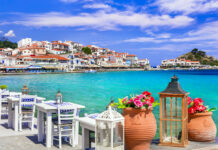
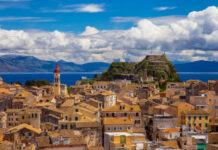
A mix of cultures
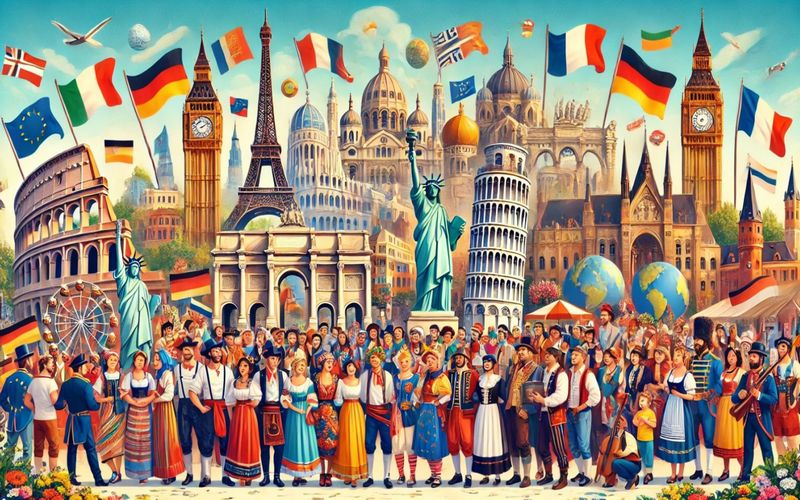
Europe’s got 46 countries, at least according to the United Nations—and each one brings its own flavor to the table. Every country has its own culture, language, habits, and a million little quirks that set it apart from the rest. Sure, you can lump them into groups like Balkan, Slavic, Scandinavian, or Western, but honestly, no two are exactly alike. Sometimes you’ll notice similarities, but the differences are just as obvious, if not more so.
Living on a continent packed with so much variety feels exciting. Every time you cross a border, you run into new traditions and get hit with surprises you didn’t see coming. There’s always something new to learn, and let’s be real—one lifetime isn’t enough to catch all the oddities and wonders Europe has to offer.
A variety of languages
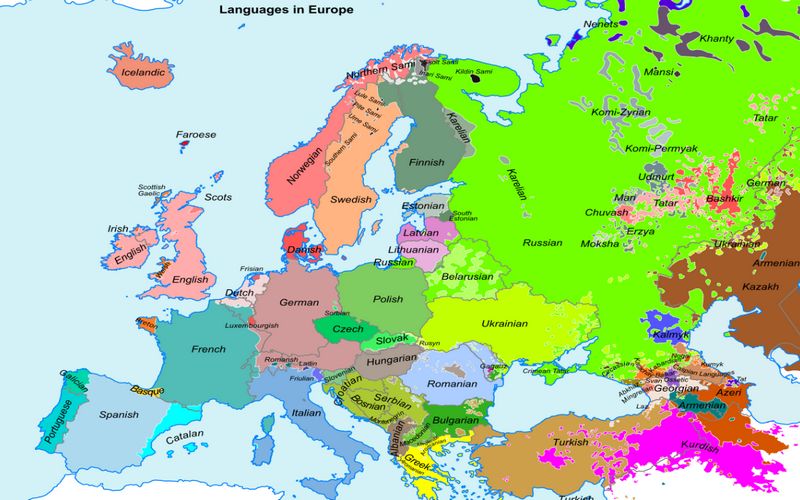
With all those cultures comes a wild mix of languages. Europe has 24 official languages, but if you count everything people speak—including those not officially recognized—you’re looking at nearly 300. That’s not even counting all the different regional dialects floating around.
So, living in Europe basically drops you into a language playground. A quick flight could land you somewhere you don’t understand a word, pushing you to pick up new phrases or even a whole new language. If that sounds a bit intimidating, don’t stress—English is the go-to language for travelers and locals alike, and most places you’ll manage just fine with it. Of course, some countries are more fluent than others, but in general, English gets you pretty far. And hey, any extra languages you know just make life (and travel) easier.
By the way, we’ve got a separate article listing the top English-speaking countries in Europe—worth checking out if you’re curious.
Easy travel
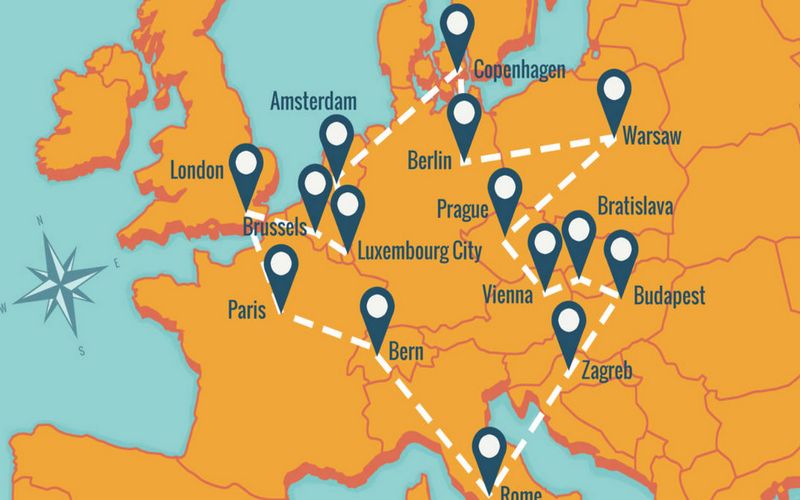
Europe might have a ton of countries, but it’s actually the second smallest continent. That makes getting around surprisingly simple. Thanks to the European Union and the Schengen Zone, if you’re a citizen, you can cross borders without needing a visa—or even a passport in most cases.
Because everything’s packed in so tight, you can hop on a train and end up in a completely different culture in just a few hours. Interrail passes make those big train trips easy and pretty affordable. If you’re more of a bus person, tons of coach companies crisscross the continent. You can get from Berlin to Vienna for about €40 with Flixbus, just to give you an idea.
Prefer flying? Europe’s budget airlines have you covered. Sometimes you’ll find deals that get you from London to Copenhagen in under two hours for just €15. With prices and distances like that, it’s tough not to give in to wanderlust. Honestly, it’d be a shame not to take advantage and explore every last corner.
Prosperous economy
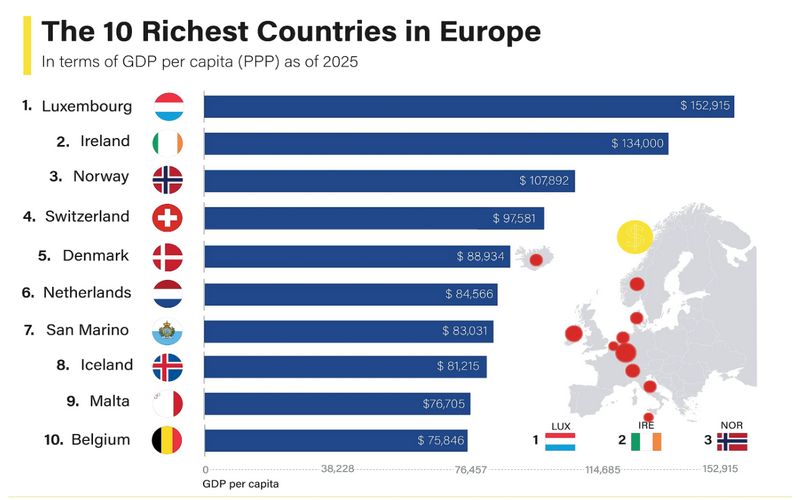
Europe’s known for being well-developed and generally prosperous. Sure, the cost of living changes from country to country. Germany, Austria, Switzerland, and the Scandinavian countries are on the pricey side, but they also offer top-notch quality of life. Spain, Portugal, Poland, and the Balkans are a lot more affordable, though salaries might be lower too.
Still, no matter where you end up, you’re looking at a decent standard of living and a solid economy. So you can pick your new home based on what matters to you—weather, culture, language—without worrying too much about sacrificing comfort or stability.
Abundant job opportunities
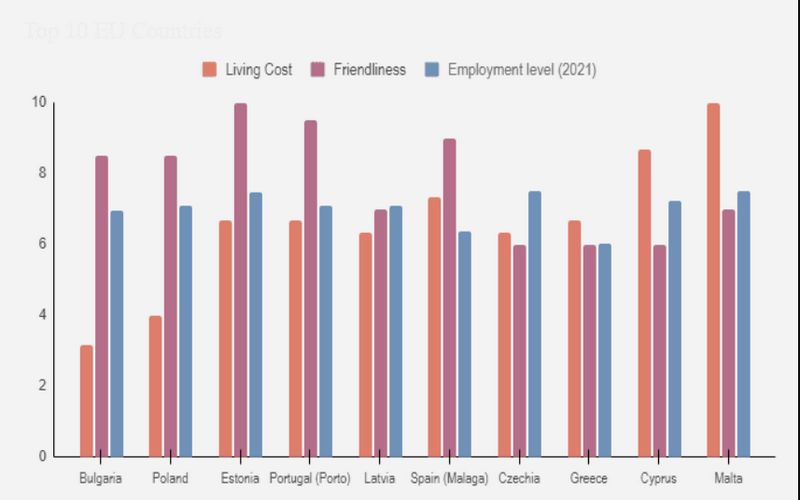
Europe’s job market really pulls out all the stops. With a strong economy backing it up, you’ll find opportunities everywhere—doesn’t matter if you want to work in healthcare, business, or strike out on your own as a freelancer. There’s room to grow, no matter what you’re after.
And here’s something a lot of people don’t expect: you don’t always need to know the local language to land a job in Europe. Seriously. Sites like Europe Language Jobs let you search for positions where you can use your native tongue or any other languages you already speak.
Want to work in Ireland and speak Dutch all day? Go for it. Thinking about using your Spanish in Greece? That’s absolutely on the table.
When it comes to jobs in Europe, the options just keep coming. Sometimes you don’t even realize how valuable your language skills are until you see all the openings out there.
If you’re stuck on which country to pick, try the Work Abroad Calculator. It shows you where your job pays the most, so you can make the smartest choice. Working abroad doesn’t have to be a shot in the dark—make it count.
International climate
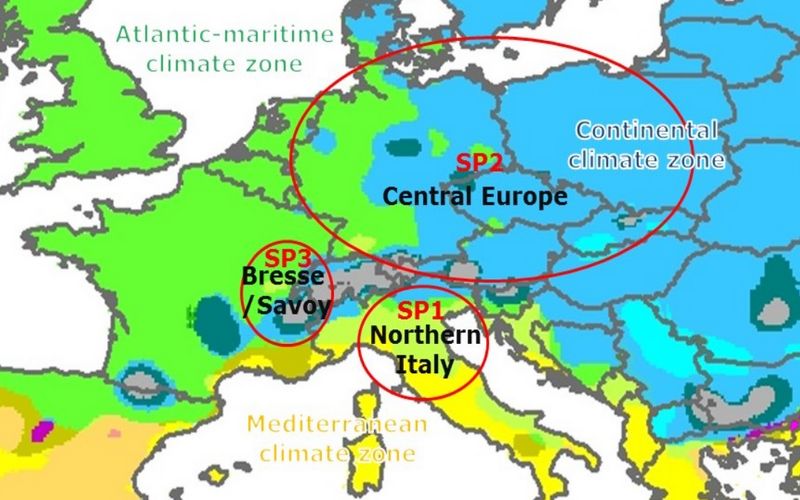
Europe’s famous for its mix of cultures and endless job options. It’s a real melting pot, packed with people from every corner of the world—expats, locals living abroad, you name it.
You get this blend everywhere. Step outside and you’ll hear a dozen languages at once, and you can eat your way around the globe without leaving your own neighborhood. Study at a European university or join a company here, and you’ll meet folks with all sorts of backgrounds.
Of course, some countries are more international than others. Certain cities attract expats like magnets. If you’re curious where everyone’s heading, check out our guide to the top expat destinations in Europe for 2023. You might find your next home on that list.
Beautiful sights
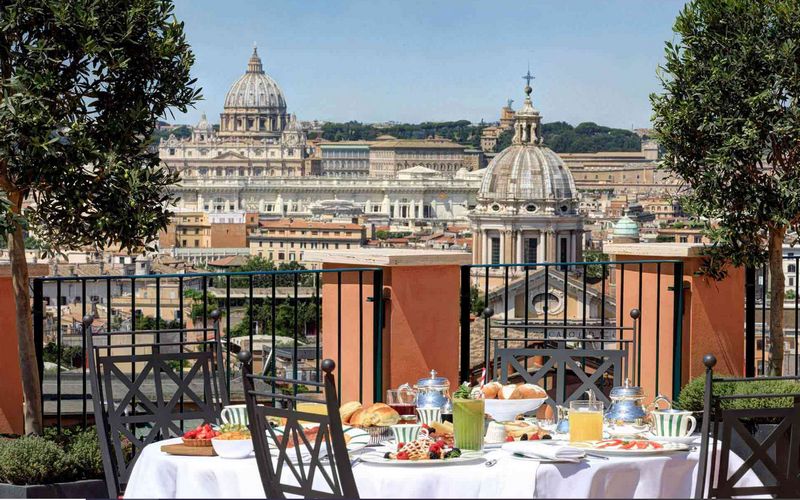
Europe checks every box for scenery. Oceans? Got them. Towering mountains? Plenty. Lakes, forests, and even deserts? Absolutely.
Surprised about the deserts? It’s true—Europe’s got a handful of those too.
The landscapes here can impress even the pickiest travelers. If you love mountains, head for the Alps—they sweep across eight countries and the views are unreal.
More into water? You’ve got your pick: cold seas, warm seas, lakes, rivers, bays, and even the open Atlantic. There’s no shortage of places to swim, sail, or just relax by the water.
Nature lovers can recharge in places like Slovenia, Latvia, Spain, or anywhere in Scandinavia—these spots have some of the greenest spaces in Europe. Since over 40% of the continent is blanketed by forests, you’ll always find somewhere to unwind.
The weather’s just as varied. Northern Europe brings icy winters and snowy scenes, while the south basks in sun and heat. So whether you’re after snow or sand, you’re covered.
And the cities? They’re as diverse as the landscapes. One day you’re strolling through a charming little village by the sea, the next you’re lost in the energy of Berlin or London. Rustic or modern, quiet or buzzing—whatever your style, there’s a corner of Europe that fits.
So much to do
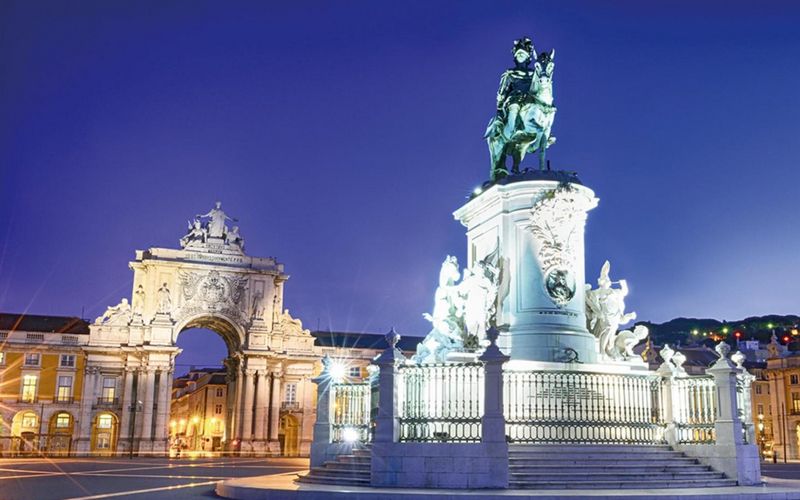
Europe just doesn’t run out of things to offer. The climates and the scenery change so much from place to place, you always find something new. If you love skiing, you’re set—the Alps and the Pyrenees deliver top-notch slopes, no question. Surfers chase waves in Portugal or Cornwall. Hikers? Pick a direction. Every corner has a trail or a mountain path calling your name.
And honestly, you don’t have to go far. A quick two-hour trip lands you at a ski resort in winter or a sunny beach in summer. It’s that easy.
You could try something different every year, for your whole life, and you’d still barely scratch the surface. Road trips here are never boring—every stretch brings a new sight, another place you want to stop and explore.
Long, empty highways? Not in Europe. Instead, you get forests, sparkling seas, mountains, endless fields—there’s always something that catches your eye when you’re on the move.
City life? You won’t get bored. Whether it’s grand old monuments or sleek new skyscrapers, Europe’s cities have layers. Step into a café, catch a play, wander random streets, or just soak in the vibe—there’s always something happening.
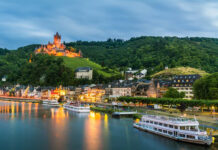
One cool thing: most capitals are built along rivers. So, river cruises aren’t just for tourists—they’re genuinely one of the best ways to see the heart of a city without wearing out your shoes. You get that mix of old bridges, quirky buildings, and the city buzzing around you.
Whatever you’re into, Europe’s got it. Dream trip, new hobby, or just a change of scene—you’ll find it here.
History around every corner

There’s a reason people call Europe “The Old Continent.” The history here is wild. Every region has its own backstory, each one different.
Europe’s past is layered with the footsteps of Greeks, Romans, Etruscans, Gauls, Germans, Britons, Slavs, Vikings—you name it. Even the Ottoman Empire left its mark, especially in the east.
It hasn’t all been easy. This continent has seen wars, revolutions, world-changing inventions, and groundbreaking art. Some of the world’s most important thinkers, artists, and leaders called Europe home.
Living here means you just stumble across places with deep stories. Sometimes you’re standing somewhere, and you realize this spot changed the world a little. It makes you pause and actually think about where you come from. It’s inspiring, honestly, knowing your home played a part in so much that shaped the world.
Old meets new
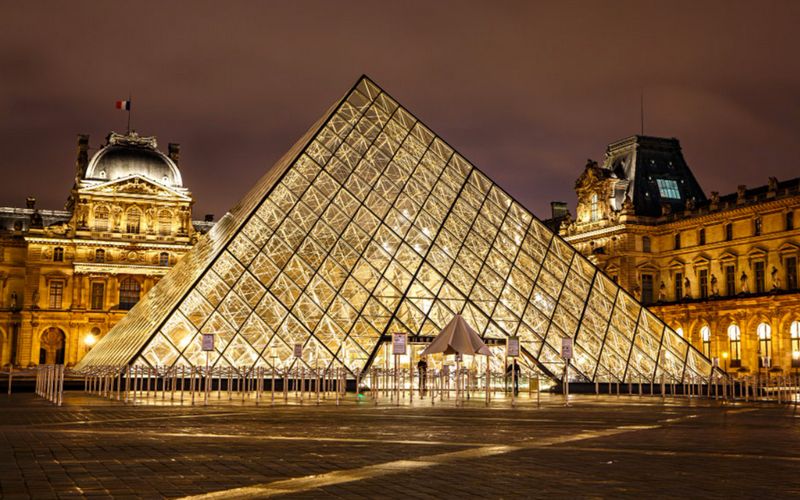
Europe wears its history with pride. The cities show it off—old buildings, cobbled streets, a sense of the past tucked into daily life. But don’t think for a second that Europe’s stuck looking backward.
People here are good at keeping the best of the old and mixing it with the new. They remember where they came from, but they push ahead too.
Berlin’s the perfect example. Decades after the wall came down, you still feel the difference between east and west, but that’s what makes it interesting. The city jumps from grand, classical neighborhoods to wild, artsy districts packed with street art and offbeat bars.
Or look at Prague. The old town is gorgeous—everyone knows that—but the city’s also booming. New companies are moving in, and the place is buzzing with life. Prague proves you don’t have to pick between history and progress. You can have both, right there, side by side.