Planning a trip to Europe can feel like solving a massive puzzle. When is the best time to visit Europe for good weather? When will my budget go the furthest? And is it even possible to see the Eiffel Tower without getting lost in a sea of selfie sticks? It’s easy to feel overwhelmed, but the simple answer is often just a matter of timing.
Weather & Travel Tips for the Best Time to Visit Europe
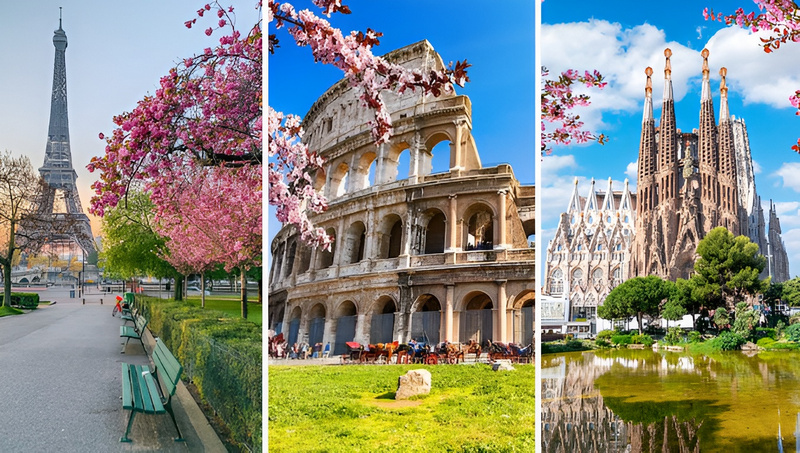
The secret that savvy travelers swear by is aiming for Europe’s shoulder season—the magical months of spring (April to early June) and fall (September and October).
Think of it as the ‘Goldilocks’ of travel: not too hot, not too crowded, but just right. In practice, this means you can wander through Rome’s Forum with room to breathe in May. Try that in July, and the same path is often a slow, sweltering shuffle.
This strategy is also much kinder to your wallet.
While a summer flight from New York to Paris can easily soar past $1,200, industry data reveals that the same ticket in October might cost closer to $750. For many, successfully avoiding summer crowds in Europe can mean saving 20-40% on flights and hotels—money better spent on gelato and museum tickets.
Beyond the clear benefits of fewer people and lower prices, these months offer their own unique magic. You can see the Netherlands burst into a rainbow of tulips or explore Europe fall foliage destinations like Tuscany during the wine harvest.
Finding that perfect balance of great weather and unforgettable experiences is all about knowing what each season offers.

The Peak Season Trade-Off: Is a Summer Trip to Europe Worth It?
There’s no denying the appeal of Europe in the summer. From June to August, the continent comes alive with long, sun-drenched days, vibrant outdoor cafes, and a guarantee that every landmark and museum will be open. The weather is at its most reliable, making it perfect for swimming in the Mediterranean or enjoying a picnic in a Parisian park. It’s the classic European vacation dream for a reason.
However, this perfect weather comes with a significant catch: crowds and costs. Summer is peak season, and while American tourists are part of the equation, the biggest factor is that Europeans themselves are on holiday. August, in particular, is when many countries shut down for their summer breaks, leading to packed beaches, sold-out attractions, and the year’s highest flight and hotel prices.
If your schedule locks you into a summer trip, you can still have a fantastic time by planning strategically. A little preparation goes a long way toward avoiding the worst of the summer crowds in Europe.
- Book everything early: Secure tickets for major attractions like the Eiffel Tower or Colosseum at least three months in advance.
- Stay smart: Look for hotels or rentals in charming neighborhoods just outside the main tourist center for better rates.
- Sightsee before 10 a.m.: Explore popular spots in the early morning to beat the afternoon heat and the largest tour groups.
A summer trip means trading smaller crowds and lower prices for the best possible weather. For travelers who prefer more breathing room and a healthier travel budget, the off-season offers an entirely different, and equally magical, experience.
Winter in Europe: The Smart Choice for Budget Travel and Festive Fun
For travelers whose top priority is stretching their budget, winter is a game-changer. This is Europe’s true off-season, and the savings can be dramatic. Flights and hotels in January and February—often the cheapest months to fly to Europe—can be up to 50% less expensive than in July. Major cities like Rome and Paris are still vibrant, but you’ll explore them with far fewer crowds and a much healthier wallet.
But winter travel isn’t just about saving money. December offers a unique and magical experience that summer can’t match: the world-famous Christmas markets.
Cities across Germany, Austria, and France transform into winter wonderlands with twinkling lights, the scent of mulled wine, and charming stalls selling handmade crafts. This festive atmosphere, a key part of any European Christmas market guide, provides a compelling reason to embrace the cold.
Of course, there are trade-offs to consider when weighing off-season Europe travel pros and cons. You’ll need to pack warm layers, but the more significant adjustment for many is the limited daylight. In northern cities like Copenhagen or Stockholm, the sun can set as early as 3 p.m. This requires planning outdoor sightseeing for the middle of the day, leaving evenings free for cozy restaurants, concerts, and museums.
This makes winter the perfect season for travelers who prioritize atmosphere and deep-value deals over long, sunny days. It’s an ideal time for city breaks focused on indoor culture and festive cheer.

Europe’s Weather Month-by-Month
Thinking about Europe’s weather by month can be tricky because the continent’s climate isn’t one-size-fits-all. A trip in April can mean shorts and sunshine in one country but a winter coat in another.
The easiest way to get a handle on it is to think of Europe in three simple zones: the warm South (Spain, Italy, Greece), the moderate West & Central (France, Germany, UK), and the cool North (Sweden, Norway, Denmark).
This variation is most obvious during the spring. While Southern Europe is already enjoying warm, beach-adjacent weather, the North is just beginning to thaw, with spring arriving much later. This transition period is part of what is Europe’s shoulder season, offering a sweet spot of mild weather in many popular destinations before the summer crowds arrive.
By summer, warmth spreads across the continent.
The Mediterranean becomes properly hot—perfect for a classic beach holiday. Meanwhile, cities like Amsterdam or Berlin experience pleasant, warm days that are ideal for sightseeing without the intense heat of the south.
Autumn mirrors the spring, with the seasons changing at different speeds. You could be enjoying a final swim in the warm seas of Croatia in late September, while Paris is already seeing crisp, cool days perfect for cozying up in a café. Knowing this staggered seasonal weather in Europe for tourists is key to packing correctly.
Finally, winter brings the sharpest contrast. While cities like Rome and Lisbon remain mild (though often rainy), Germany and Austria are blanketed in snow, creating a magical winter wonderland. This regional split gives you an incredible choice, letting you find your perfect climate any time of year.
Answering Your Top Europe Travel Questions
You likely have a particular kind of trip in mind, and the timing for that can be very different from a general sightseeing tour. Here are the answers to some of the most common travel questions. If you’re dreaming of a beach holiday, the key is not just sunshine, but warm water. For the best Mediterranean beach weather, target the period from late June to early September. By late June, the sea has had time to warm up beautifully, and by choosing the start or end of this window, you’ll miss the absolute peak crowds of late July and August.
Chasing the aurora borealis, on the other hand, is a completely different calculation. For the best time to see the northern lights in Scandinavia, you need long, dark, and clear nights. This rules out the summer months with their “midnight sun.” Your best bet is to travel far north into the Arctic Circle between late September and March, when the extended darkness gives you the greatest chance to see the magical display.
But what if your number one priority is your wallet? If you’re looking for a bargain, the cheapest months to fly to Europe are almost always January and February. With the Christmas holidays over and chilly weather across much of the continent, travel demand hits its lowest point of the year—and prices for flights and hotels follow suit.

How to Choose YOUR Best Time to Visit Europe
Deciding on the best time to visit Europe comes down to one simple question: What matters most to you? Every season offers a different experience, and matching your priorities to the calendar is the key to planning the perfect trip. This simple framework turns a tough decision into three clear steps.
- Step 1: Rank Your Priorities. What’s your #1 goal? Is it the lowest cost, the best weather, or the fewest people?
- Step 2: Match Your Priority to a Season. Low cost points to Winter, perfect weather points to Summer, and a balance of both points to the Shoulder Seasons (Spring/Fall). A trip to Europe on a budget by season is now simple to map out.
- Step 3: Pick a Month. Choose a month within that season that fits your dream activity, whether that’s seeing Parisian flowers in May or festive markets in December.
There is no single “best” time to visit Europe, but there is a perfect time for your adventure. By defining what you want most from your travels—be it budget-friendly exploration, sun-drenched relaxation, or crowd-free sightseeing—you can move from dreaming to deciding. Your perfect trip is a plan waiting to be made.