Imagine the deafening roar of 50,000 spectators, the smell of sweat and sand, and the ground shaking beneath your feet.
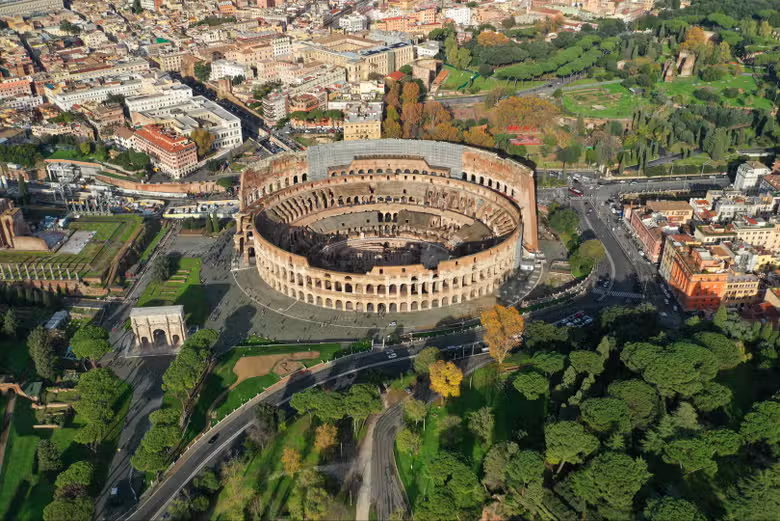
This wasn’t a Hollywood production; it was a standard Tuesday at the Colosseum, the Superdome of the ancient world. As one of the most iconic Rome Tourist Attractions, the Colosseum offers more than photo opportunities—it provides a visceral connection to the empire that shaped Western civilization.
Explore Rome: Top 10 Must-See Tourist Attractions
Archaeologists often describe the city as a massive “historical lasagna,” where medieval churches sit atop Roman temples and Renaissance palaces overlook modern traffic. Rather than seeing isolated ruins, you are viewing three millennia stacked vertically. A logical walking itinerary for the Rome city center helps distinguish the Rome landmarks of the Caesars from the masterpieces of Michelangelo.
The Empire’s Greatest Stage: Navigating the Colosseum and Roman Forum Like a Local
Stepping inside the Flavian Amphitheater feels surprisingly familiar; with its numbered gates and tiered seating, known as the cavea, it serves as the architectural blueprint for every modern football stadium.
The real engineering marvel, however, lies beneath the arena floor. Peering down into the exposed maze of ruined walls reveals the hypogeum—a complex “backstage” system of tunnels and elevators where gladiators and wild animals were hoisted up to the sand to surprise the roaring crowds.

Just outside the arena lies the Roman Forum, the chaotic, beating heart of Ancient Rome. Distinguishing this area from the adjacent “Imperial Fora” is essential; while the Imperial Fora were symmetrical plazas built by specific emperors to flaunt their wealth, the Roman Forum grew organically over centuries like a cluttered downtown district.
Here, you stumble upon layers of history, such as the Temple of Caesar, which marks the exact spot where the dictator was cremated in 44 BC.
To keep your Rome sightseeing on track and avoid wasting hours in the scorching sun, follow this tactical approach:
- Secure skip-the-line Colosseum and Roman Forum tickets at least two weeks in advance.
- Enter via the Palatine Hill gate, which usually has significantly shorter security queues than the main arena entrance.
- Download the official Parco Colosseo app for a free digital map to make sense of the sprawling ruins.
With the seat of the Empire conquered, cross the river to look toward the heavens.
Rome Tourist Attractions: Choosing Between the Vatican Museums and St. Peter’s Basilica
Many visitors treat Rome sightseeing at the Vatican as a single stop, but navigating the Vatican Museums vs St. Peter’s Basilica highlights requires two distinct strategies. The Museums function as a 9-mile-long gallery of papal collections, culminating in the Sistine Chapel. While the sheer density of art is overwhelming, prioritize the Gallery of Maps and the famous double-helix staircase before craning your neck at Michelangelo’s ceiling.
Just next door, St. Peter’s Basilica stands as the largest church in the world. While entrance to the main floor is free, the real secret is paying to climb the cupola (dome) for a panoramic view of the city. Inside, look for Michelangelo’s Pietà—a sculpture of Mary holding Jesus so lifelike that the cold marble drapery appears to be soft, folding fabric.
Before queuing for these Rome tourist attractions, strictly adhere to the “Vatican Modesty” rules, which require covering shoulders and knees regardless of the heat in Rome. Guards will ruthlessly turn away unprepared travelers at the security checkpoints. With the Renaissance masterpieces admired, head back across the river to discover the ancient engineering miracle that inspired them.

Engineering the Impossible: Why the Pantheon’s Concrete Dome Still Defies Modern Logic
Walking into the Pantheon feels like stepping into a mathematical impossibility.
Unlike modern Rome landmarks reliant on steel skeletons, this massive rotunda (round building) supports the world’s largest unreinforced concrete dome purely through ingenuity. The secret is a concrete recipe that becomes lighter as it rises, using airy pumice stone at the top to prevent collapse.
Glance upward to see the oculus (eye), a central hole serving as the only light source. While it casts a dramatic spotlight, it also lets in rain, requiring a sloped floor for drainage. Notice the recessed ceiling squares, called coffering; these aren’t just decoration, but a clever engineering trick to reduce the heavy dome’s weight.
After visiting the Pantheon, avoid the piazza’s tourist traps. Instead, find Armando al Pantheon nearby for traditional Roman food. Re-energized, head toward the city’s most famous fountain.
Baroque Masterpieces: Finding the Best Time to Toss Your Coin at the Trevi Fountain
Turning a corner to face the roar of water is a highlight of any Rome sightseeing day. This masterpiece of Baroque drama features Oceanus, a Titan of the sea, taming wild horses that represent the ocean’s changing moods. Surprisingly, the water powering this spectacle travels via the Aqua Virgo, a functioning underground aqueduct dating back to 19 BC.
To experience this magic without the crush of midday crowds, the best time of day to visit Trevi Fountain is shortly after sunrise. Once there, turn your back to the water and toss a coin over your left shoulder:
- One coin: You will return to Rome.
- Two coins: You will find romance.
- Three coins: You will marry.
With your return trip secured on your mental map of Rome tourist attractions, trade stone crowds for painted masterpieces.
Art and Escape: Securing Your Spot at the Borghese Gallery and Exploring Trastevere’s Hidden Streets
While the Vatican Museums are an exhausting marathon, the Borghese Gallery is an intimate sprint through the private collection of a powerful cardinal. This villa forces you to plan ahead, as guided tours of the Borghese Gallery often sell out weeks in advance due to strict capacity limits. Inside, you see the clear shift from the calm, posed perfection of the Renaissance to the dramatic, emotional swirling of the Baroque era.
Notice how the god Pluto’s fingers seem to actually press into Proserpina’s thigh; this creates a “frozen-in-motion” effect that makes the statue look like a snapshot taken a split second before disaster, contrasting sharply with the stiff poses of earlier centuries.
Crossing the river leads you to Trastevere, a neighborhood that feels more like a medieval village than a capital city. Here, wandering the ivy-covered cobblestones counts as exploring hidden gems off Rome’s beaten path, even without a map.
As the sun sets, consult a Trastevere neighborhood nightlife and dining guide to find a trattoria serving authentic cacio e pepe, the perfect reward after a day of high culture, before tackling the logistics.
The Smart Traveler’s Playbook: Roma Pass Benefits and Avoiding Common Tourist Mistakes
Rome rewards strategy, but it often punishes the unprepared with exhaustion and unnecessary costs. The Roma Pass benefits for first-time visitors include bypassing the longest queues at the Colosseum and gaining free entry to your first two sites. However, do the math before purchasing: if you plan to wander piazzas rather than museum-hop, booking individual tickets is often the wiser financial move.
Mastering how to use public transportation in Rome requires one critical step that catches many off guard: validation. Buying a ticket isn’t enough; you must stamp it in the yellow machines onboard to activate the time window. Holding a blank ticket during an inspection is considered fare evasion and results in immediate, hefty fines.
Steer clear of these common tourist mistakes to avoid in Rome to save your euros for better meals:
- Buying Water: Instead of purchasing plastic bottles, fill a reusable flask at a nasone (big nose), the city’s omnipresent free drinking fountains.
- Menu Photos: Restaurants that display pictures of food or employ “waiter catchers” outside are rarely authentic.
- Ignoring Free Art: Many churches house masterpieces by Caravaggio that are completely free to view, offering budget-friendly things to do in Rome.
With logistics handled, you can focus on the atmosphere rather than the hassle.
Your Roman Legacy: Planning a Walking Itinerary That Connects Ancient Ruins to Modern Flavors
Mastering these landmarks reveals that the Eternal City is surprisingly compact. Craft a logical walking itinerary for the Rome city center by grouping ancient sites like the Colosseum before sweeping west toward the Pantheon. To maximize convenience, decide where to stay in Rome for sightseeing by choosing the Centro Storico or Monti neighborhoods, placing you within walking distance of history rather than a commute away.
Timing your visit unlocks exceptional value, particularly regarding the free entrance days for Rome state museums on the first Sunday of every month. Whether tossing a coin in the Trevi Fountain or navigating the Forum, you are no longer just a spectator but a participant in a story that has been unfolding for millennia.