Everyone knows the Côte d’Azur is beautiful, but choosing where to sleep is the difference between a relaxing Mediterranean escape and a logistical nightmare.
Deciding Where to Stay in French Riviera towns often feels paralyzing because the region isn’t just one destination—it is a collection of tiny, distinct worlds. One wrong turn in planning can land you in a quiet hilltop village when you wanted vibrant nightlife, or stuck in traffic when you crave the beach.
Best Places to Stay in French Riviera: Top Towns & Hotels
Visualize the coastline as a “Pearl Necklace.” The Mediterranean shore forms the string, and the towns are the unique pearls strung along it, each easily accessible yet completely different in style.
While the western side near St. Tropez offers glitz and sandy beaches perfect for those wondering how to plan a French Riviera road trip itinerary, the eastern side near the Italian border provides dramatic cliffs and historic charm.
Experienced travelers recommend the “Hub-and-Spoke” model to maximize your time. Instead of packing your bags every morning, choose one central “Hub” and visit the surrounding “Spokes” on day trips. This approach transforms a frantic schedule into a leisurely holiday, serving as the best base for exploring the French Riviera by train without the stress of constant relocation.
Why Nice is the Tactical Heart of the French Riviera: Connectivity, Culture, and Cost-Efficiency
Choosing Nice isn’t just about being in the region’s largest city; it is about strategic positioning. If you are looking for the optimal rail hub, this is the undisputed winner. The city functions as the coast’s central nervous system, anchored by the Gare de Nice-Ville (the main train station). From here, the TER regional train—think of it as an above-ground subway with ocean views—can whisk you east to Monaco in 20 minutes or west to Cannes in 30, completely bypassing the notorious summer traffic jams that plague drivers.

Beyond logistics, the city offers a “split personality” that helps travelers find their specific niche. Most visitors gravitate toward Vieux Nice (Old Town), a maze of narrow, shadowed streets filled with spice markets and pastel buildings. Staying here offers an immense atmosphere, but often involves navigating steep stairs and late-night noise. In contrast, the “New Town” closer to the train station provides elevators, air conditioning, and immediate access to transport, often at a lower price point.
Your budget will also stretch significantly further here than in the glamorous neighbors to the east. While a simple lunch in Monte Carlo comes with a premium price tag, Nice offers a wide range of options, from the historic luxury of Le Negresco to affordable family-run bistros. On average, dining and accommodation here can be up to 30% cheaper than in Monaco, allowing you to allocate funds toward experiences rather than basic overhead.
Consider these specific advantages to see if the “Hub” strategy fits:
- Transport Dominance: Direct train and bus lines to almost every village without transfers.
- Dining Variety: Hundreds of restaurants prevent the menu fatigue common in smaller towns.
- Budget Flexibility: A healthy mix of hostels, mid-range apartments, and 5-star palaces.
However, if you prefer sandy beaches over Nice’s famous pebbles, or red-carpet glamour over urban energy, the answer might lie further west.
Cannes vs. Antibes: Choosing Between Red-Carpet Glamour and Cobblestone History
Travelers frequently ask if it is better to stay in Nice or Cannes, and the answer usually comes down to footwear and sand. While Nice offers urban energy and pebbles, Cannes is the region’s glamorous show pony, defined by the soft, sandy beaches along La Croisette. This famous promenade is a runway where high fashion meets the Mediterranean, lined with designer boutiques and grand hotels that turn exclusivity into an art form.
It is the ideal base if your itinerary revolves around sunbathing on comfortable terrain during the day and dressing up for a vibrant, upscale social scene at night. Be aware that this cinematic allure often comes with a premium price tag and a bustling, sometimes crowded, atmosphere that prioritizes style over serenity.
In sharp contrast, Antibes offers a slower, more authentic Provençal rhythm just a few train stops away. Enclosed by 16th-century ramparts, the Old Town feels intimate and lived-in, centered around the Marché Provençal, where locals actually buy their produce. This town attracts those seeking history and culture—specifically the Picasso Museum—rather than red-carpet moments. It is arguably one of the most family-friendly seaside resorts in the South of France because it balances safe, approachable beaches like Plage de la Gravette with a walkable, pedestrian-friendly historic center that doesn’t require a taxi to navigate.
Your decision ultimately depends on the atmosphere you wish to wake up to: the high-octane energy of Cannes or the artistic, maritime heritage of Antibes.
Visitors seeking quiet sophistication often find the best luxury boutique hotels on the Côte d’Azur hidden within the Cap d’Antibes peninsula, offering seclusion that larger cities cannot match. If neither the busy promenades nor the walled towns offer the tranquility you seek, you might need to leave sea level entirely. The most breathtaking views—and steepest walks—await in the hilltop escapes to the east.

The Romantic Escapes: Why Villefranche-sur-Mer and Eze Village are Worth the Vertical Climb
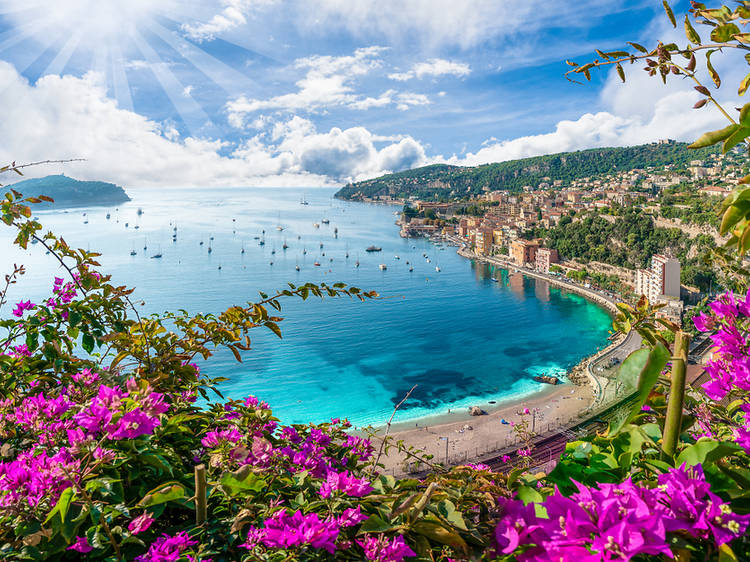
East of Nice, the coastline abandons the flat terrain and turns vertical, sliced by three famous cliffside roads known as the “Corniches” (Lower, Middle, and Upper). The first stop on the Lower Corniche is Villefranche-sur-Mer, one of the hidden gem coastal towns near Nice that feels worlds apart from the city bustle. Nestled around a deep, curved harbor, this colorful village offers sandy beaches and a “locals only” atmosphere. It is the ideal compromise for travelers who want easy access to Nice but prefer to fall asleep to the sound of lapping water rather than traffic.
Climbing higher to the Middle Corniche reveals Eze Village, a medieval hamlet perched like an eagle’s nest atop a rocky peak. While often cited as one of the most romantic villages in the South of France for its stunning panoramas, staying overnight here requires careful planning. The village is pedestrian-only with steep, cobblestone paths that make hauling heavy luggage difficult, and the streets become incredibly quiet once the day-trippers depart at sunset. To reach these spots, savvy travelers skip the train—which runs mostly through dark tunnels here—and take the #607 bus along the coast for movie-set views at a fraction of the cost.
The choice between staying in Monaco, Villefranche-sur-Mer, or Eze depends on your tolerance for logistics versus luxury. Before booking a hillside retreat, run through this quick checklist:
- Mobility: Can you handle steep stairs and no taxi access to your hotel door?
- Dining: Are you content with fewer restaurant choices that may close early?
- Views vs. Water: Do you prioritize a balcony view over walking distance to a swim?
If the quiet life feels too slow and you crave high-stakes glamour around the clock, head further east or far west.
Navigating the High Stakes of Luxury: When to Stay in Monaco or Saint-Tropez
For travelers seeking the electric energy of James Bond movies rather than sleepy medieval streets, Monaco offers a distinct brand of urban perfection. This independent principality is not just a playground for billionaires; it serves as an exceptionally secure and clean strategic base with direct train access to Italy and Nice. Unlike the hill towns, here you are paying for immaculate infrastructure and proximity to high-end shopping in the Carré d’Or (Golden Square), where the streets are as manicured as the hotel lobbies.
While Monaco is connected to everything, Saint-Tropez is famously isolated, creating a logistical hurdle that catches many first-timers off guard. This fishing village-turned-superstar sits on a peninsula with only one main road in and out, leading to the infamous “St. Tropez Traffic Trap,” where a short drive can take hours during peak season. Many visitors specifically book luxury hotels with private beach access to avoid ever needing to leave their resort, but if you do plan to rent one of the top-rated beachfront villas Saint-Tropez is known for, the smartest arrival strategy is taking the passenger ferry from Nice or Cannes to bypass the gridlock entirely.
Travelers often mistakenly believe they must endure the traffic of the west to experience exclusive beach culture, but the peninsula of Saint-Jean-Cap-Ferrat offers a sophisticated alternative just minutes from Nice.
This area specializes in “quiet luxury” and houses some of the most historic five-star resorts in Saint-Jean-Cap-Ferrat, providing the seclusion of a private estate without the geographical isolation. Regardless of whether you choose the glitter of Monaco or the beaches of the Cap, the common thread connecting these luxury hubs is the rail line.

The TER Train Strategy: How to See the Entire Coast Without a Rental Car
Renting a car often feels like the default choice for a European vacation, but on the Riviera, a vehicle is frequently a liability. Between gridlocked coastal roads and hotel parking fees that can exceed €30 per night, a car adds stress rather than freedom. The region’s actual lifeline is the TER (Transport Express Régional), a double-decker train system that functions like an open-air subway. Because the tracks hug the shoreline, your commute offers million-dollar sea views that are often superior to what you would see from the highway.
Choosing the best base for exploring the French Riviera by train usually points travelers toward Nice, but the rail network makes even peripheral towns accessible. This connectivity answers the common question “Is Menton worth visiting for a week?” with a resounding yes; despite sitting on the Italian border, reliable trains connect you to central Nice in just over half an hour. To skip the ticket vending machine lines, download the “Zou!” app, which allows you to purchase digital tickets on your phone instantly.
Riviera Rail Cheat Sheet (from Nice-Ville):
- To Villefranche-sur-Mer: 7 minutes (~€2.00)
- To Monaco: 22 minutes (~€4.40)
- To Cannes: 35 minutes (~€7.90)
Summer travelers should look for the “Pass Sud Azur,” a seasonal offer that provides unlimited daily travel for a flat rate, effectively helping travelers get around the Côte d’Azur without a car on a budget.
Your 3-Step Riviera Booking Blueprint: Seasonality, Location, and Duration
You’ve moved past the confusion of geography and can now choose a base that truly fits your travel style. To decide how many days you need in the French Riviera, apply the “3-5-7 Rule”: plan 3 days for a single city break, 5 days to explore a specific region, and 7 days to comfortably experience the full coast.
For the best time of year to visit French Riviera beaches, target the shoulder seasons of June or the “Golden Month” of September to maximize value. Start your planning here:
- Pick your hub: Choose Nice for logistics, Antibes for families, or Villefranche for romance.
- Verify transport: Ensure your hotel is within walking distance of a TER train station.
- Book ahead: Secure reservations 4+ months out to avoid high-season premiums.
The Riviera is no longer an intimidating puzzle of high costs; it is a series of accessible adventures. By anchoring yourself in the right town, you ensure your memories are defined by Mediterranean sunsets rather than missed connections.