The Eiffel Tower stands in Paris
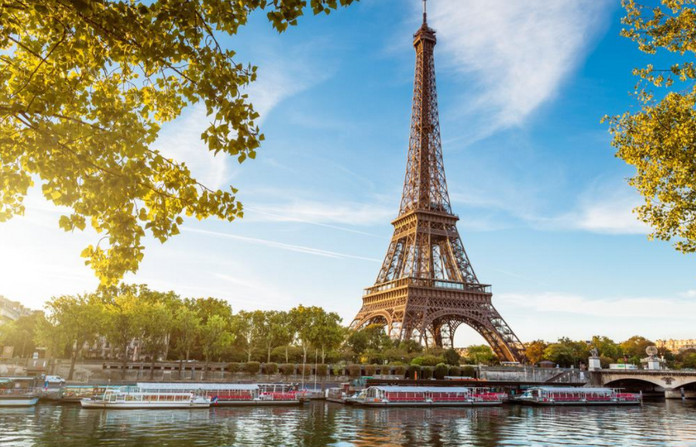
Standing tall above Paris, nothing says France like the Eiffel Tower. Built for the 1889 World’s Fair, it faced harsh words at first – then charm won out, turning scorn into pride. Though created by engineer Gustave Eiffel, its purpose stretched beyond steel: a statement of craft and vision aimed outward. Back then, painters and thinkers called it ugly, even monstrous – but slowly, sightseers rewrote that tale with their awe. As years passed, cameras captured it again and again; now it lives in art, film, memory, everywhere. Few structures on the planet carry such instant recognition. Some folks come just to sit in little cafes, eyes lifted toward the iron frame above. River boats glide past it slow, carrying quiet onlookers under gray and gold skies. Others stand still on bridges where light bounces off water in pieces. Daytime shows rust and sky pressed together, sharp lines cutting through clouds. Night wraps it in flickering gold, like a secret everyone knows. That tower does not shout, yet somehow always speaks first.
Above the city, rising more than 300 meters, the tower opens wide views from its lookout points. When darkness falls, glowing beams transform it into one of Europe’s most dreamlike scenes. Inside, guests eat at refined dining spots with sweeping visions of the Seine below. Moving upward, lifts pass over Paris rooftops, uncovering well–known sites far beyond sight. As daylight fades, shifting tones across the heavens offer striking settings for images. Out near the Champ de Mars, street musicians mix with chattering groups, making everything feel alive. Depending on the time of year, the tower shows a new face – warm and open under summer skies, then glowing softly when cold nights bring strings of light.
Standing tall today, the Eiffel Tower means many things – love, invention, grace shaped by France. Still central each year when fireworks rise or festivals unfold beneath its iron frame. People walking together across borders pick it for saying yes to forever, or just snapping summer moments. Hard to believe some hated it at first, yet now few sights stir such wide affection. Still turning heads well over 100 years since it rose, the structure stirs awe without trying. Not just iron stacked high, it stands as proof of bold dreams shaped into form.
Notre-Dame Cathedral – Gothic Masterpiece of Paris
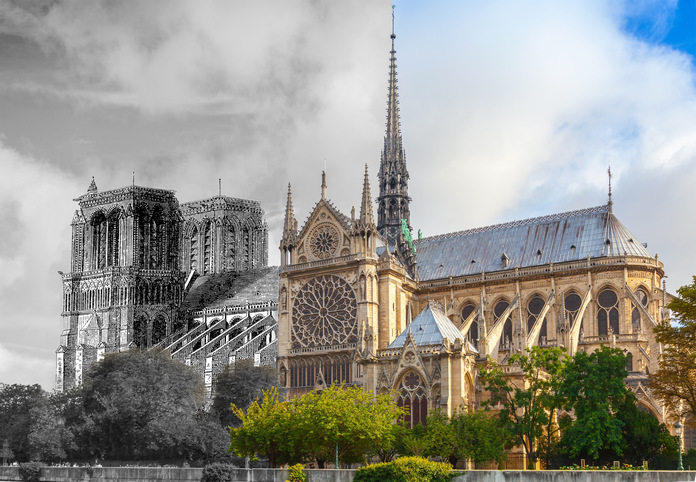
Standing tall on the Île de la Cité, the Notre–Dame Cathedral shows off French Gothic design at its most striking. For hundreds of years, it has served as a central place of faith in Paris. Work started during the 1100s, continuing close to two centuries, thanks to relentless effort by artisans of that era. Kings were crowned here, along with many turning points in France playing out within these walls. Its massive frame rises above the small island, pulling travelers from faraway places without saying a word. For ages, creators and scholars alike have praised its deep meaning and visual grace. Inside these walls, faith meets craft through time that lingers like smoke after a fire.
Perched above the walls, those arched supports show what stone could do when shaped by patient hands centuries ago. Even after flames tore through in 2019, workers never stopped patching up its bones piece by piece. Light spills through the big round glass eyes of the building, painting the floor in shifting hues come morning. Twisted shapes along the roofline stare down with grins that hint at old warnings and forgotten tales. Behind each cracked surface, someone’s chisel brought history back to life stroke after careful stroke. Inside, the huge organ fills space under tall arches, making visitors feel small. Still a place that grips hearts, even while workers fix its wounds.
Still standing tall through time, Notre-Dame holds deep spiritual meaning across Europe. A masterpiece shaped by stone and belief, it draws people who pause nearby just to look. Century after century, stories have grown around its walls instead of fading away. Films unfold its presence while artists return again and again to capture something unseen. Its survival speaks louder than words ever could. From Paris to distant shores, its influence spreads, a timeless echo of Gothic grace across continents. Each glance at Notre-Dame stirs something deep, pulling thoughts into its silent story.
Palace of Versailles – Royal Grandeur and Power
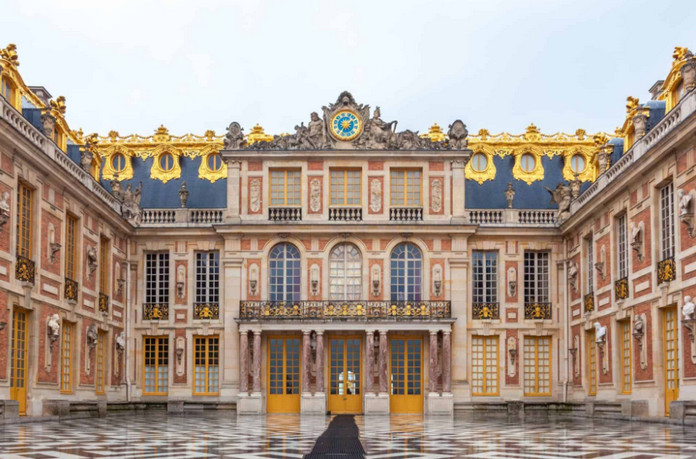
Outside Paris sits the Palace of Versailles – once home to kings and power. Though quiet now, it carried centuries of command beneath its gilded ceilings. Instead of democracy, rule flowed from one throne inside these walls. Ambassadors once wandered corridors meant to overwhelm at first glance. Luxury wasn’t added – it formed every floor, frame, and fixture. Because size alone didn’t convey strength, detail did. Gardens unfold beyond glass doors, shaped by precision rather than wild growth. Fountains move when water is granted, dancing among stone figures. Artists came not just to serve but to leave marks on history’s edge. Architects bent design toward spectacle without naming it such. Music used to echo where silence often rests today. To walk here now is to drift between echoes of past ceremony.
Once just a quiet place for hunting trips, this building became something far greater under Louis XIV. Not only did he expand it, but the palace turned into a symbol of unmatched luxury. What stands out most is the Hall of Mirrors – its shimmering light dances across polished surfaces all day long. Inside, rooms meant for royalty show off detailed craftsmanship at every turn. While chandeliers hang overhead, gilded details wrap around doorways and walls. Paintings stretch across ceilings, each telling stories without words. Sunlight pours in, bouncing from mirror to mirror like a silent performance. Step outside, then notice how paths line up perfectly with water jets leaping skyward. These outdoor spaces follow strict patterns, yet feel alive when fountains start flowing. Even now, centuries later, the balance between nature and design holds strong. Hidden away from the main halls, lesser–known pavilions reveal quiet corners where royalty once retreated. Power shines through every choice at Versailles – each design meant to impress without saying a word.
Once home to kings, Versailles shaped Europe’s past when the 1919 treaty was sealed within its halls. Inside those walls, a major 20th-century peace deal came into being. Nowadays, crowds flood in, drawn by grandeur and what happened there long ago. Walk through with a guide, hear tales unfold – of power plays, opulent feasts, secrets behind gilded doors. Still today, Versailles stands among France’s most cherished cultural sites. The grandeur lives on, reflecting peak royal splendor paired with bold creative vision.
Arc de Triomphe – Monument of Victory
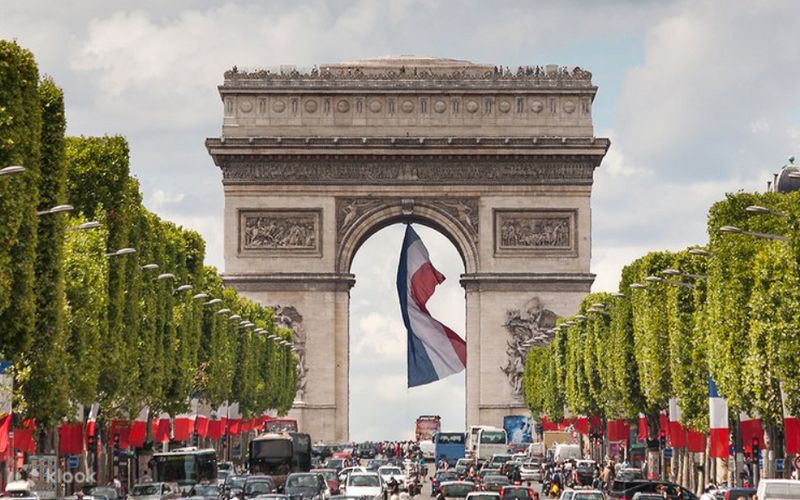
High above the Champs-Élysées rises the Arc de Triomphe, a well–known symbol of Paris. Ordered by Napoleon Bonaparte, its construction began as a tribute to French soldiers lost in battle during turbulent times. Instead of mere decoration, it stands as proof of national strength and confidence from that era. Although surrounded by wide avenues, the structure overwhelms them with sheer size. From its summit, sightseers look out across major roads stretching far, arranged much like lines drawn from a center point.
Carved details cover the structure, along with inscribed names of military leaders – this turns stone into memory. Below rests the Unknown Warrior, guarded by a fire that never dies. Night after night, someone lights the flame again, just like before. Sacrifice lives here, tied together with quiet pride. People come not just to look, but to stand still, feel weight, remember loss. What stands in stone speaks louder than words ever could.
Mont Saint-Michel – The Island Abbey
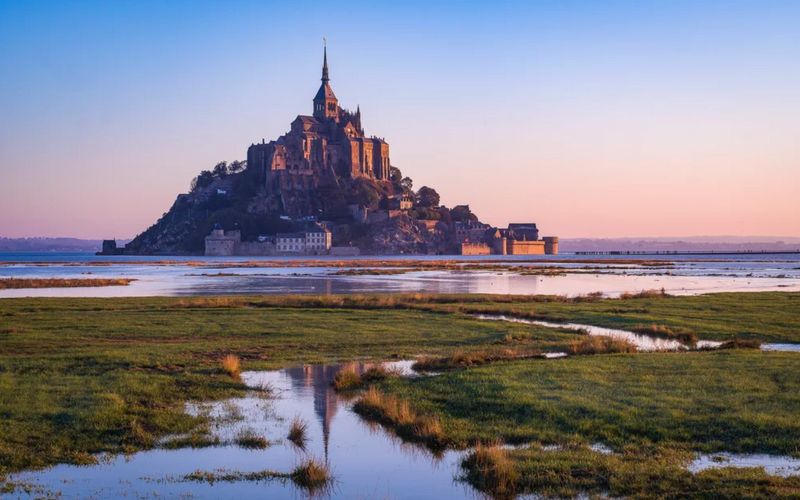
A stone tower climbs from a lone rock in the water – Mont Saint–Michel, one of France’s dreamlike wonders. Tides shift around it, making the place seem unmoored, caught between ocean and clouds. When waves rise, they swallow the path linking the island to the shore. Legends grew here, fed by isolation and changing seas. Walking through feels like entering an old tale that never ended.
When the sea rises, the place floats on its own like something out of a dream. Built in the 700s, the monastery wore many hats – prayer house, fortress, shelter during war. People came from far away just to step inside, even if the water made it risky. Hallways carved from rock wind through the structure, telling quiet stories of monks long gone. Now tourists fill guestbooks and cameras click nonstop near its ancient walls.
Twisting pathways and sky–reaching towers turn this place into something few forget across France. Down beneath the monastery, cottages from long–ago centuries line tiny market stalls. Stone steps climb sharply, pulling you into another century with each footfall. From up high, the land unfolds – salt marshes, tides, open skies. Around every corner here, old stories peek out from behind quiet walls.
Louvre Museum – Home of Masterpieces
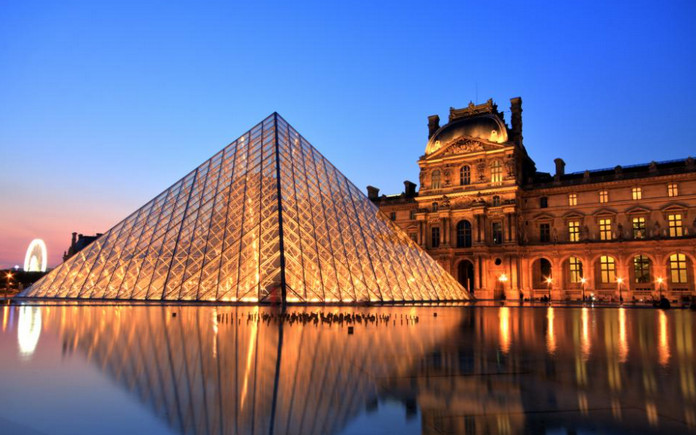
Home to more than just famous paintings, the Louvre sits where kings once lived, right in central Paris. Built first as a stronghold around the 1100s, its walls have seen centuries shift. Later, royalty moved in, turning battlements into grand living spaces. Only much later did ordinary people gain entry, after it opened for everyone. Now, crowds pour in yearly, drawn by corridors filled with sculptures, jewels, and masterpieces. A beacon of human creation, it pulses quietly amid city streets.
Hidden inside are thousands of artworks – Mona Lisa stares quietly, Venus de Milo stands nearby, treasures from far–off times fill room after room. From Egypt’s old stones to Rome’s carved gods, each step moves through centuries shaped by hands long gone. That sharp glass triangle at the front? A bold shape set down by the architect I. M. Pei. Now it glints under Paris light, part of the city’s skin. Old meets new here in a way that shapes everything about the place. Hours slip by, sometimes whole days, as people wander through hall after hall without end.
Home to centuries of creativity, the Louvre stands as proof of France’s deep care for art and shared memory. More than just walls filled with objects, it works like a classroom without chairs where ideas come alive. People who paint, write, or research travel far to spend time inside its halls. Every gallery opens into another time, another way people once lived. Few places on Earth hold such weight in shaping how we see the past.
Sainte-Chapelle – Jewel Box of Light
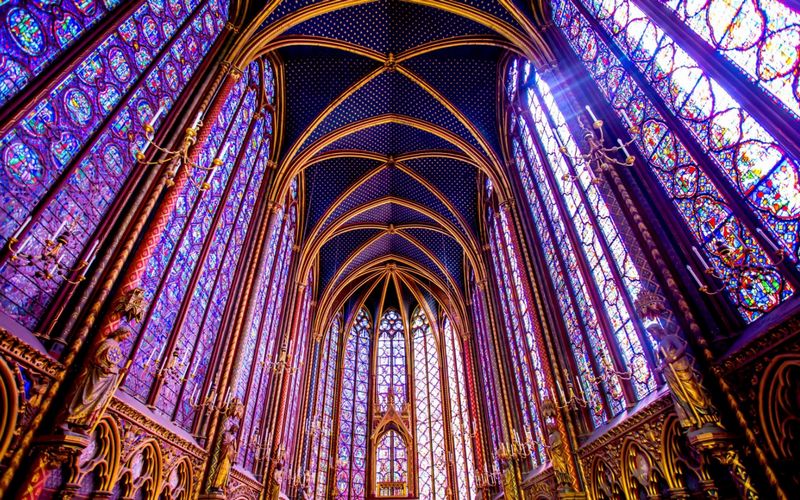
Deep inside the Île de la Cité sits Sainte-Chapelle, a striking Gothic chapel rising from the 1200s. Built under King Louis IX, it held holy Christian treasures brought across lands. A peak of craftsmanship and faith woven into stone and glass. Light flows through tall windows, making walls seem thin, almost airlike. Though compact in footprint, few walk out untouched by what they’ve seen.
Sunlight spills through the towering stained-glass panels, turning the space within into a shifting mosaic of colored beams. Biblical moments unfold across glass surfaces – Adam in the garden, Christ rising – each framed in radiant detail. Almost every inch of the high walls gives way to these luminous pictures, leaving little room for bare stone. Visitors look up to find stories stretching from creation’s dawn to life beyond death, painted in fiery reds and deep blues. The glow inside doesn’t just brighten – it hums, quiet yet intense, like something older than silence. Hands long gone shaped each pane with precision now rarely matched, carving legacy into fragile sheets of color.
Inside Sainte-Chapelle, sunlight spills through towering stained glass, painting walls in hues few places can match. Not many expect such stillness where history and art meet so closely. Though tucked within bustling Paris, it speaks without shouting. Where stone meets sky–high windows, awe arrives quietly. Few interiors carry grace like this – simple, yet unforgettable.
Pont du Gard – Roman Engineering Marvel
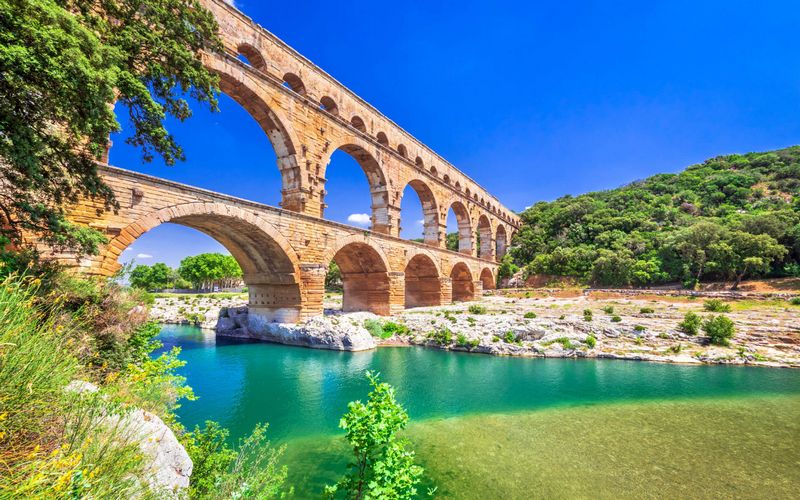
South of France holds the Pont du Gard, a Roman aqueduct bridge rising from the 1st century AD. This remains among the most intact feats of Roman design surviving now. Water once moved through it across stretches of land, guided by sharp accuracy. Clever methods shaped its build, revealing Rome’s deep skill in structures. Nearly twenty centuries later, builders and planners still find ideas within its stones.
Down near the river, a stone arch spans wide where water once moved high above the valley floor. Heavy chunks of rock sit tight together, shaped so close they need nothing to stick them in place. Gravity pulled liquid along gently through channels built on balance, not force. Even now engineers stop and stare at how exact every piece still lines up after centuries pass. What remains shows more than old plans – it breathes slow proof of lasting work done well.
Standing tall on three levels, those arches curve skyward like something alive. Beauty meets purpose here without trying too hard. Settled among trees and stone, the crossing feels like it grew right out of the land itself. People move slowly along its path, drawn by views of water beneath their feet. Old as it is, this place holds quiet moments just as well as history. Named by UNESCO, it now stands not only for what was built long ago but also how gently craft can meet nature.
Château de Chambord – Renaissance Dream Castle
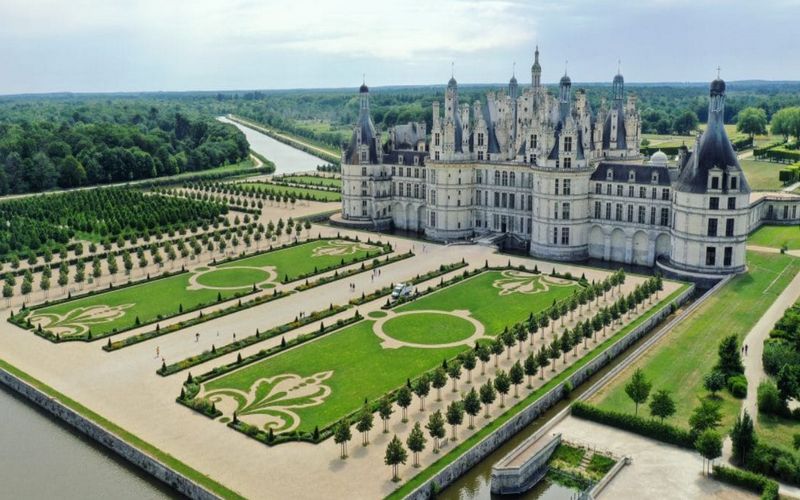
Standing tall in the Loire Valley, the Château de Chambord ranks among France’s grandest castles. Though first planned as a retreat for King Francis I during hunts, its purpose shifted fast under Renaissance influence. Instead of just serving as shelter in the woods, it turned into a bold display of authority and vision. Combining sturdy old–world walls with graceful new–age lines shaped its identity. Because of sheer scale and fine craftsmanship, few who see it forget what lies within view.
Hidden among the treetops, clusters of spires rise as secrets whispered through time. Not just balanced but mirrored perfectly, the front stretches wide under centuries–old stone. A spiral within a spiral – the famed stairway twists upward where separate paths never cross. Though stories link it to da Vinci, truth blurs into legend near each carved step. Built during an age that chased new ideas, its layout feels quietly revolutionary even now. From above, rooftops resemble a village frozen mid–gesture – crowded, intricate, alive. Craftsmanship lives in every arch, corner, and shadow. Each detail speaks without needing words.
Hidden among thick woods, Chambord feels lifted from an old storybook – a standout gem in the Loire Valley. Bigger than most villages, its land opens up into miles of trails wrapped in quiet beauty. Animals wander without fences, moving through fields and trees just as they always have. Summer drapes it in deep foliage while fog curls around stone walls when cold comes. People keep coming back, drawn not by fame but by what once was.