Sagrada Família, Barcelona
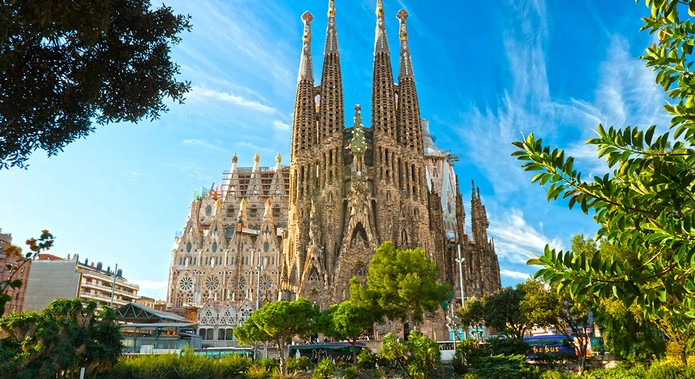
Standing tall in Barcelona, the Sagrada Família remains uncompleted yet impossible to ignore. This unique basilica mixes old–world Gothic forms with flowing Art Nouveau details. Though still under construction, it dominates conversations about Spain’s most striking buildings
Up above, the tall spires rise like frozen music against the sky. Work started way back in 1882, yet builders still add pieces now, century after century. Faces carved into stone watch quietly from every angle, whispering stories without sound. Light spills through colorful glass, painting the floor in shifting patterns as time moves. Underneath, thick pillars spread wide like tree trunks in a silent woodland. What you feel there isn’t just awe – it’s something quieter, deeper. Sunbeams crawl across surfaces, turning walls into moving canvases by noon. Each visit offers a different glow, a new shadow, another surprise. Hidden in each curve are meanings drawn from plants, belief, shapes. Though never done, it draws crowds like few places in Spain, standing tall as what Barcelona is known for.
Alhambra, Granada
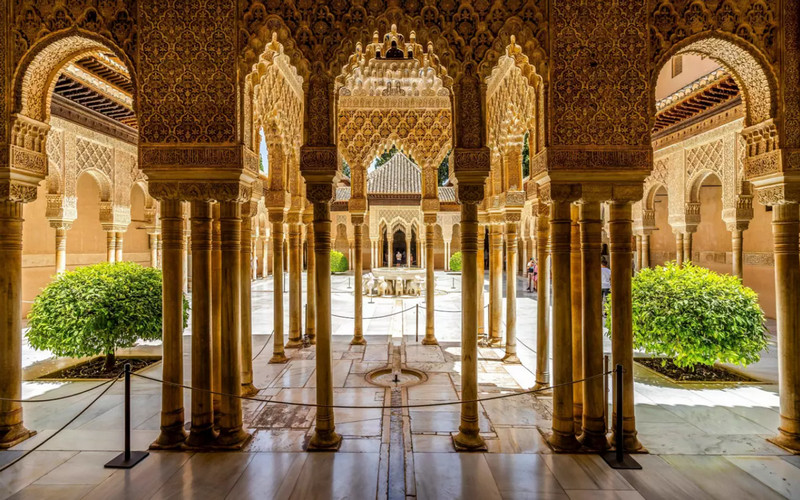
Perched above Granada, the Alhambra spreads across hilltops like a whisper from another time. During the 1200s and 1300s, hands shaped stone into a palace–fortress alive with detail. Instead of grand statements, beauty hides in carved plaster, balanced green spaces, quiet yards. Inside, the Hall of the Ambassadors holds space with scale, whereas the Court of the Lions draws breath through precision. Beyond walls, Generalife’s terraces unfold slowly, offering stillness above rooftops. More than brick or mortar, this place speaks – layer by layer – of how lives once met here under one sky.
Hidden beneath layers of time, its walls carry winding patterns and verses shaped by generations of quiet craftsmanship. Not just decoration but meaning flows through each carved line. Around corners, water slips softly across stone, a nod to ancient ideas of sanctuary. Light moves differently here – slipping between pillars, shifting with the hour like breath. Balance rules every corner, not planned perfectly yet feeling complete. Visitors often pause without knowing why. Still standing, it pulls people in, much as it did long ago.
Mezquita-Catedral, Córdoba
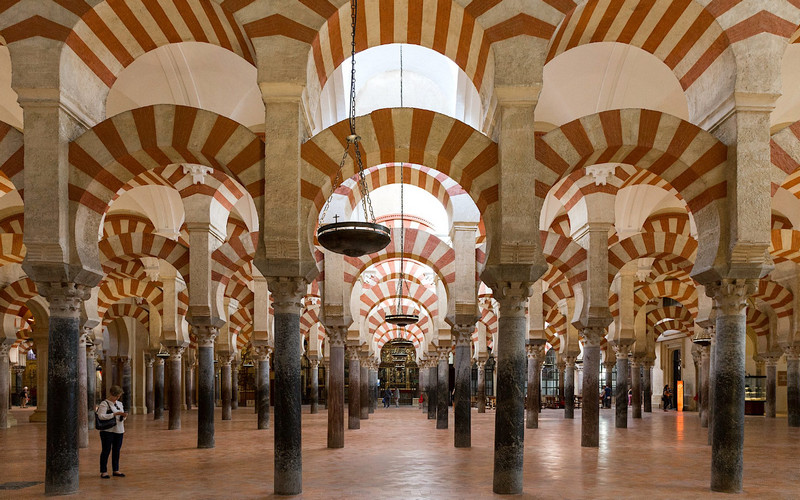
Inside, time folds into itself beneath striped arches that march in silence. Once a place of Muslim worship during the eighth-century rise of Al–Andalus, its walls absorbed centuries before becoming home to Catholic rites. After Christian forces retook the city, stone by stone, new forms grew within the old – vaulted ceilings rose where calligraphy curved. Arches painted in rust and cream stretch like echoes under frescoed domes shaped much later. Geometry speaks in circles and stars alongside altarpieces carved with saints. The air holds both prayer styles – the hush between footsteps carries more than sound. Layers do not hide; they show clearly, one beside another. This building does not choose sides – it simply stands, full of what came through time.
Endless rows of arches pull the eye forward, creating a rhythm that feels almost dreamlike. Where once there was open space, chapels emerged over time – detailed, bold, set against simpler forms. Centuries layered here, each leaving marks of shifting beliefs and traditions within these walls. Light moves quietly across surfaces, revealing how past and present lean on one another. Now it rests – not just stone but memory – as one of Spain’s rarest echoes from history.
Guggenheim Museum, Bilbao
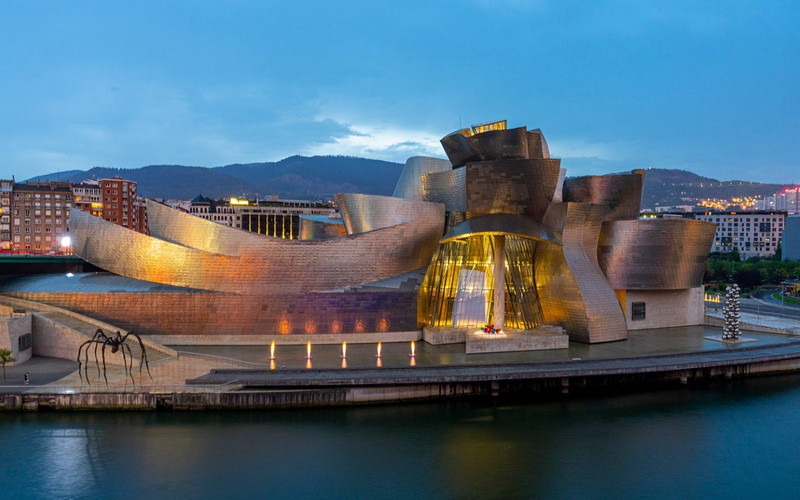
Not just stuck on history, Spain welcomes striking new forms too. Rising in Bilbao, the Guggenheim – Frank Gehry’s creation – shines with sweeping curves covered in titanium, shifting with daylight. Instead of standing still, it dances under sun and clouds, becoming art beyond what hangs inside. Because of its presence, the city reshaped around culture, drawing eyes once turned away. A single structure helped turn quiet streets into meeting places for ideas, people, vision.
From certain angles, it looks like a vessel moored by the water, echoing Bilbao’s working waterfront past. When sunlight hits, the titanium skin glows differently – soft gray one moment, gold the next. Open, airy rooms inside make space for towering artworks that fill entire halls. Beyond the walls, pieces dot the landscape – one sprouts flowers, shaped like a dog you might see in a garden. Even now, decades later, people still point to it when talking about bold new architecture.
Burgos Cathedral, Burgos
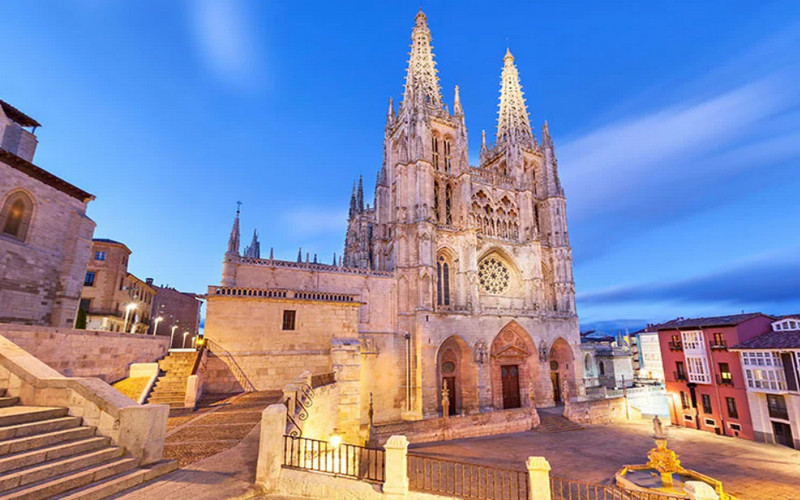
Burgos Cathedral stands as a UNESCO World Heritage Site, among Spain’s finest Gothic triumphs. Rising across three hundred years, sky–high spires meet delicate stone artistry beneath vast rose windows – echoes of deep–rooted medieval belief. Within, a maze of chapels unfolds, dotted with statues, shimmering altars, not least the dazzling staircase cloaked in gold leaf. Resting here, El Cid – the famed warrior of Spanish lore – anchors legend into brick and arch. Not many European Gothic giants reach such height, such harmony, so few leave silence in their wake.
Intricate stone carvings cover the front, looking almost like woven fabric shaped by patient hands. Rising high inside, the space pulls your eyes upward, as old Gothic halls often do. Color spills across walls when sunlight passes through painted glass. Each small chapel holds echoes of changing tastes, one era layered upon another. Still today it serves prayer and stands as a vast archive of forgotten sculptors and painters.
City of Arts and Sciences Valencia
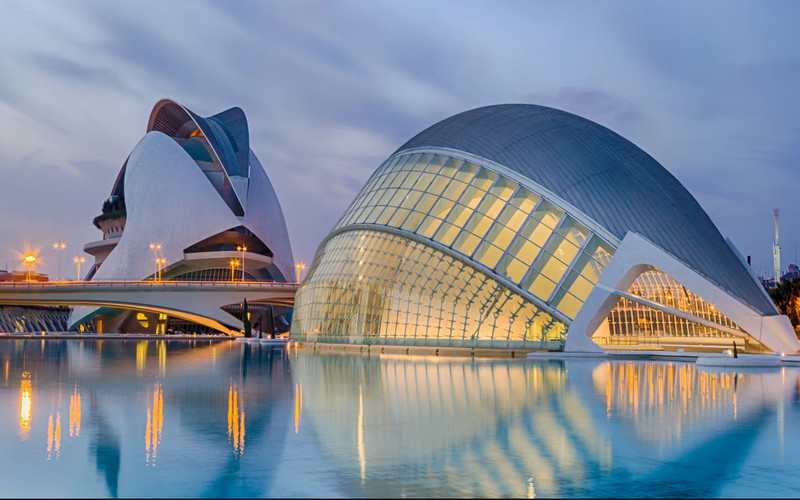
Rising from the landscape like something dreamed up in a lab, Santiago Calatrava shaped the City of Arts and Sciences into a vision straight out of sci–fi. Reflective white forms cut sharp silhouettes near shimmering blue pools. One building stares skyward as a colossal eye – the Hemisfèric – while nearby, the Opera House holds its breath in silence. Water wraps around the Oceanogràfic, pulling nature into the geometry. Art meets engineering here, yet neither feels forced. Instead of blending in, these structures declare presence. Spain’s ambition stands solid in concrete and light. Museums and performance halls exist within, though function takes second place to form. This isn’t merely culture housed – it’s identity built outward. Futurism roots itself firmly on Spanish soil through curves, glass, and daring. Vision shapes structure more than need ever could. Each angle suggests motion even when still. Imagination forged into walls that mirror sky and water alike. No past echoes loudly – this space speaks only forward. Architecture becomes prophecy written in steel and sunlight. Few places manage such quiet boldness without shouting design intent. The whole ensemble leans into possibility rather than tradition. Space flows between buildings as if choreographed. Even shadows appear calculated down to the millimeter. Yet warmth lingers beneath precision, surprising those who expect cold modernity. A sense of wonder stays fixed long after leaving.
Water mirrors stretch out, lifting the look of the place into something next century. Shapes bend softly here, while clean edges pull your eye through like a quiet rhythm. When darkness comes, buildings begin to shine, turning sidewalks into bright scenes that shift underfoot. Life beneath waves finds space too, inside an aquarium standing apart by theme alone. Science walks beside painting and daydreams, all held within these walls.
Aqueduct of Segovia
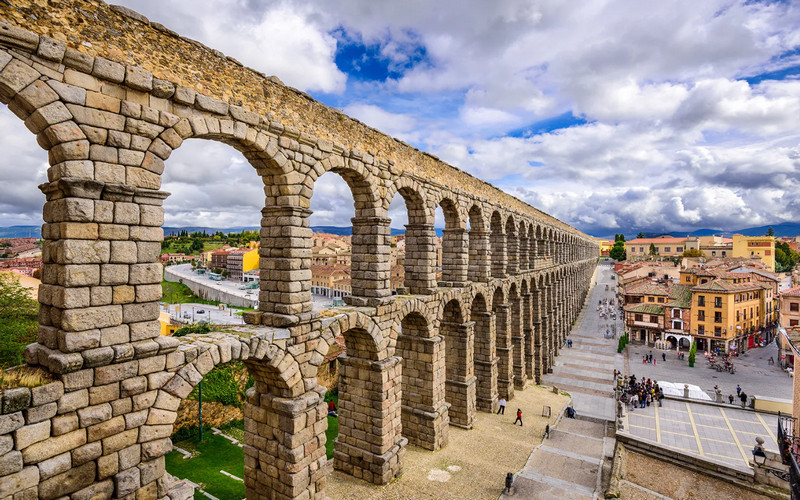
Almost two thousand years old, the Segovia aqueduct stands as a quiet marvel of early engineering. Not built with mortar, its heavy stone pieces fit perfectly through exact carving alone. More than fifteen hundred meters long, it crosses the land on over one hundred sixty arches. Rising high above the town square, it watches like an elder among buildings. One of Europe’s most complete Roman structures, it shows how well–crafted things last. Time has worn many things down – this it could not touch.
Underneath those towering arcs, people pause, struck by how immense it feels up close. Centuries passing, quakes shaking – still the huge stones hold tight, sealed without mortar. From far–off peaks, liquid life once flowed through here, fed city streets below. High curves climb into view across the old quarter, shaping what you see when you walk around town. Proof of Roman know–how stands firm, admired even now by those who pass under.
Casa Batlló, Barcelona
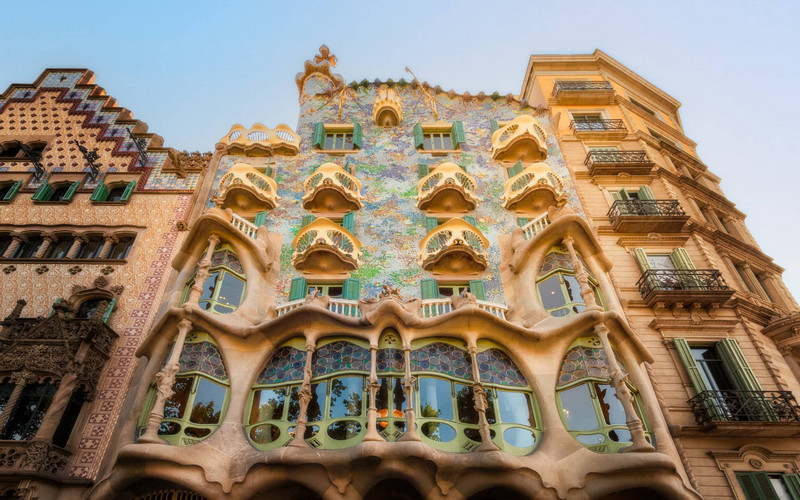
Down a busy Barcelona street stands Casa Batlló, another creation by Gaudí that bends reality just slightly. Waves of stone ripple across its front, dressed in shattered tiles glowing under sunlight. Instead of straight lines, curves twist everywhere – like nature took hold of architecture. The rooftop? A spine of scales rising like something pulled from myth. Inside, hallways curl gently, guiding steps without sharp corners or rigid order. Light slips through skylights shaped like bubbles trapped mid–rise. Rooms breathe with rhythm, more sea cave than city dwelling. Each turn offers shapes that feel grown, not built. It doesn’t shout masterpiece; it whispers wonder instead. You leave feeling you’ve wandered inside someone’s vivid nighttime vision.
Bone-white railings stretch across the front, giving it a ghostly charm. Shifting sunlight catches tile work that glimmers like reptilian skin. Some say the rooftop mimics a sleeping beast, smoke rising from a vent shaped like a crucifix. Inside, daylight moves in slow dances, shaped by precise openings. Few buildings capture Gaudí’s dreamlike vision as fully.
Royal Monastery of El Escorial Madrid Region
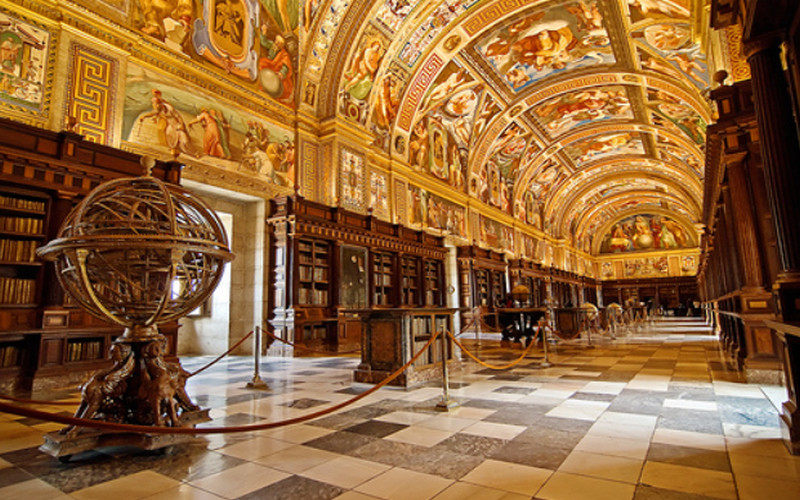
Standing tall since the 1500s, El Escorial wears many roles at once – home to kings, monks, books, and tombs. Under Philip II it rose, shaped by clean lines and quiet stone instead of flashy detail. While other Spanish buildings shout with decoration, this one speaks in silence. Courtyards stretch wide, hallways never seem to end, a dome holds court above the church roof. Power lives here, yes – but also prayer, folded into every wall like a secret note.
Sharp angles speak of royal control, shaped by Spain’s rulers long ago. Inside, rows of old books fill shelves – each page a voice from centuries past. Sound moves slowly through the basilica, deepening every quiet moment. Open plazas made of rock favor balance, not ornament. Even now, it stands central to Spain’s story, carved in stone and silence.
Seville Cathedral and La Giralda
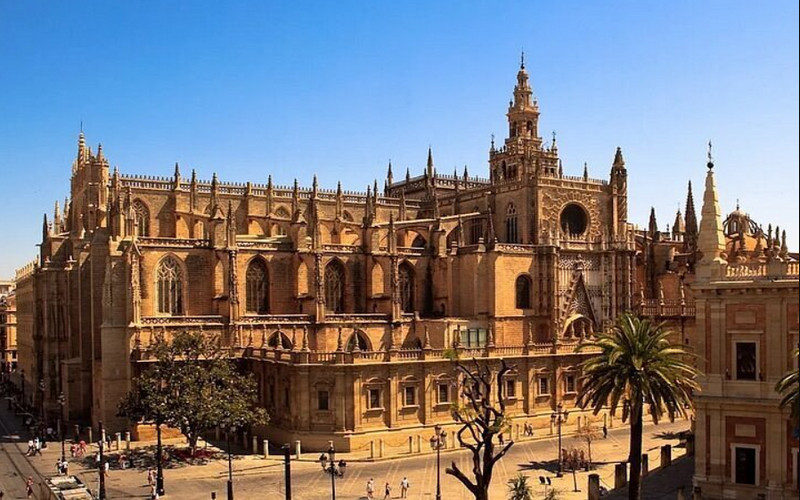
Standing huge against the skyline, Seville Cathedral stuns with scale and detail unlike any other Gothic church on Earth. Reaching high above, its arched ceilings draw eyes upward while the shimmering altar glows at the heart. Inside, each chapel unfolds with intricate care, marking a peak moment in Spain’s architectural journey. Next door rises La Giralda, once a Muslim call–to–prayer tower transformed after centuries into a ringing bell space for Christians. A steady climb leads to open air, where rooftops stretch far beyond sight. Side by side, these structures speak of change over time – cultures layered, not replaced.
Inside, the cathedral holds an enormous golden altar – one of Earth’s biggest. Sunlight streams through colored glass, brightening endless stonework halls. Instead of steps, La Giralda rises gently on a sloped path – its Muslim roots showing clearly here. Layers of design stack across time, visible in every wall and archway. Even now, it draws crowds like few other holy sites in Spain.